21
Feb
Physoderma Maydis
Symptoms:
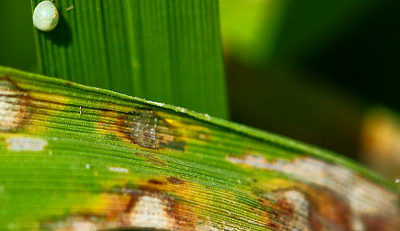
Physoderma brown spot lesions occur mainly on the leaf, but may also occur on leaf sheath, stalks, outer ear husks and tassels
As disease progresses, small lesions may coalesce to form larger affected areas
Look-Alike Diseases:
Eyespot disease caused by Aureobasidium zeae can look similar to Physoderma brown spot
Eyespot is a leaf disease with small, yellow, mostly round lesions
Main difference – lesions of eyespot do not usually occur in the banded pattern across leaf
On the leaf blade, young Physoderma lesions can also resemble those caused by rusts, such as early southern rust (see arrow below). A higher magnification... read more
22
Feb
Summary:
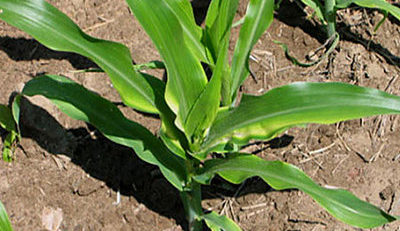
Corn is more often deficient in zinc than in other micronutrients, and is responsive to zinc application when deficient.
Zinc may be deficient in sandy soils, other low-organic soils such as those with topsoil removed or soils with high pH. Seedlings may show deficiencies during cool, wet weather.
Fields with zinc deficiency are seldom affected uniformly. Zinc deficiency symptoms may also vary from field to field.
Because soil tests for zinc are considered among the most reliable of all micronutrients, this method is most often recommended to determine zinc sufficiency. Plant analysis may also be used.
To correct... read more
22
Feb
Magnesium, an Essential Plant Nutrient
Mobile within the plant Critical for several functions:
Central element in the chlorophyll molecule
Transport of phosphorus
Enzyme activation
Nutrient uptake functions
Oil and fat production
Translocation of starch
Magnesium Deficiency Symptoms
Often confused with other nutrient inadequacies May be positively identified by:
Visual and physiological symptoms
Soil chemical analysis
Plant mineral (tissue) analysis
Visual and Physiological Symptoms:
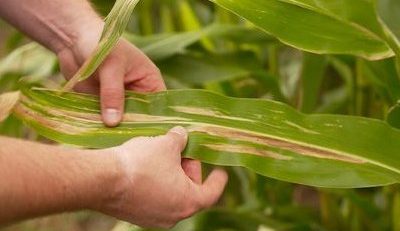
Interveinal chlorosis (yellow to white)
Necrotic edges
Purpling of the lower (older) leaves
Interveinal beading
Shorting of the internodes (in severe cases)
Favorable Conditions
Soil Physical and Chemical Properties That May Favor Magnesium Deficiencies:
Low cation exchange capacity (CEC)... read more
22
Feb
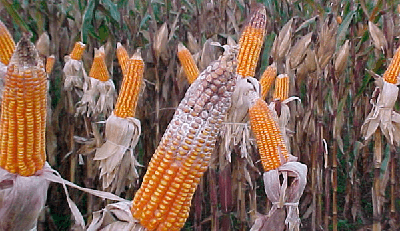
Phsoderma maydes
Healthy Leaf:
Healthy leaves shine with a rich dark green color when adequately fed.
Phosphate Shortage:
Phosphate shortage marks leaves with reddish-purple, particularly on young plants.
Potash Deficiency:
Potash deficiency appears as a firing or drying along the tips and edges of lowest leaves.
Nitrogen Hunger:
Nitrogen hunger sign is yellowing that starts at the tip and moves along middle of leaf.
Magnesium Deficiency:
Magnesium deficiency causes whitish strips along the veins and often a purplish color on the underside of the lower leaves.
Drought:
Drought causes the corn to have a grayish-green color and the leaves roll up nearly to the size... read more


Leave a Reply